
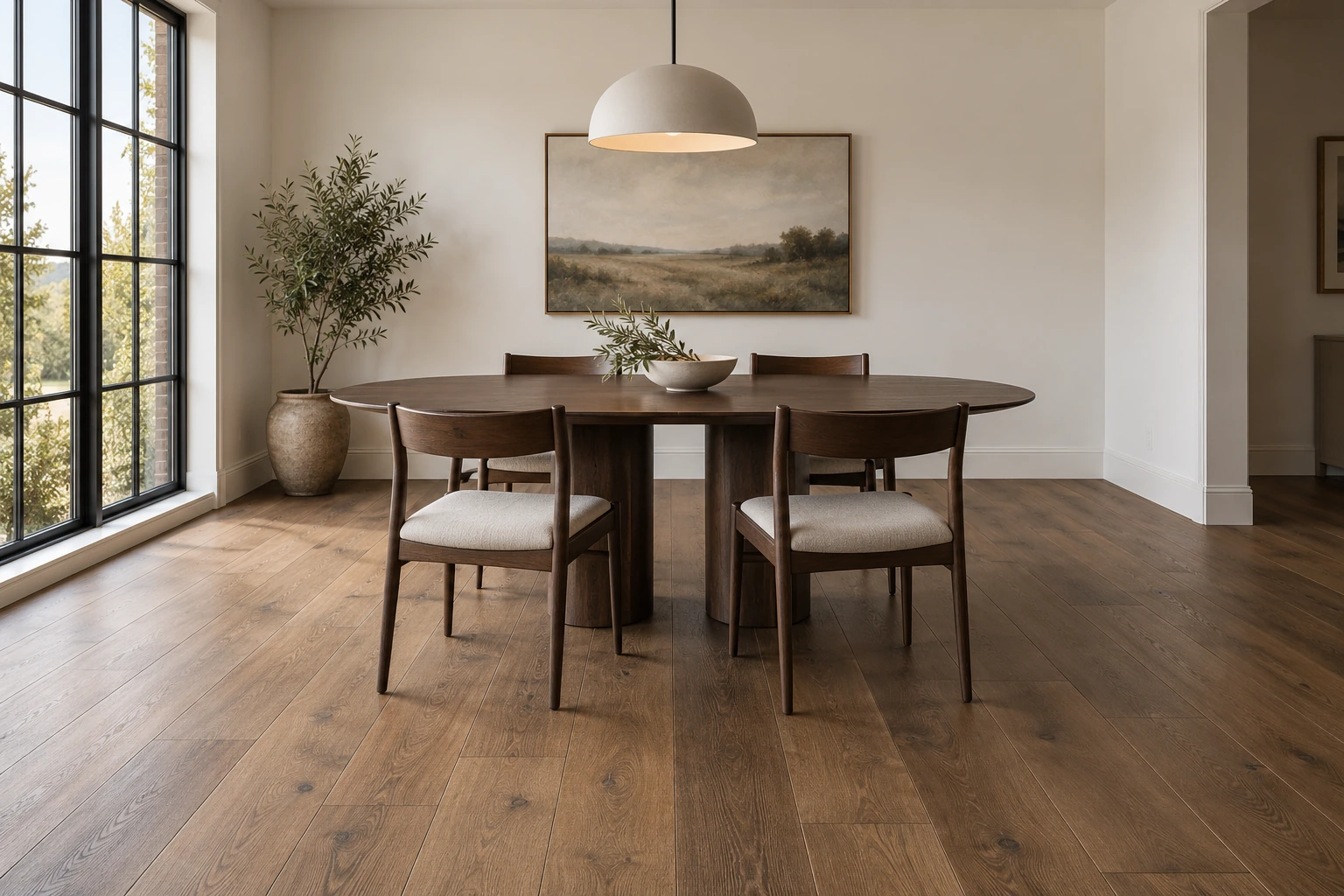
How engineered wood is built
Each board has a top layer (the veneer or wear layer) of real hardwood bonded to a core of plywood or high-density fiberboard. The cross-layered core resists the expansion and shrinkage that solid boards experience, which is why engineered products are often available in wide, long planks.
Because the surface is real wood, it looks and feels like hardwood. How many times it can be sanded depends on veneer thickness: thin veneers may not be refinishable at all, while thicker veneers can be sanded one or more times. Always check the product's specifications.
Where engineered wood makes sense
Engineered wood is a good fit when you want real wood but the room or subfloor is not ideal for solid hardwood. Many products are approved over concrete and below grade, and floating versions can go over some existing floors. That makes engineered wood a common choice for daylight basements, condos with concrete slabs, and main floors where a wide-plank look is the goal.
It is still wood. It is not a waterproof floor, so full bathrooms and laundry rooms are usually better served by tile or waterproof flooring.
Comparing engineered products
Veneer thickness
Thicker veneers cost more but add refinishing potential and longevity. Ask for the measurement, not just the overall board thickness.
Core type
Multi-ply plywood cores are common in higher-end products; HDF cores are often found in click-lock floating products. Both can perform well when installed according to the manufacturer's instructions.
Finish
Factory finishes vary from matte oil-look to aluminum-oxide urethane. Matte and wire-brushed finishes hide scratches better in homes with pets and kids.
Installation methods
- Nail-down or staple-down over a wood subfloor, similar to solid hardwood
- Glue-down over concrete or wood with the adhesive the manufacturer specifies
- Floating click-lock installation over an approved underlayment
Every method depends on a flat, dry subfloor. We check flatness and moisture before installation and include any subfloor preparation and leveling, flooring removal and baseboards and transitions in the scope. Use the Price Guide for material budgets.
Engineered wood versus solid hardwood and LVP
Compared with solid hardwood, engineered wood is usually the better choice over concrete, below grade, and in wide planks where seasonal movement is a concern. Solid hardwood wins on long-term refinishing potential. Compared with LVP, engineered wood offers the feel, sound and natural variation of real wood but is less tolerant of water and costs more per square foot.
Many Portland homeowners mix materials: engineered wood through the main living areas, LVP or tile in bathrooms and laundry rooms, and carpet in bedrooms. Planning the transitions between them at the start keeps the finished floors looking consistent.
Material price ranges
| Material | Good · Entry | Better · Mid-range | Best · Premium |
|---|---|---|---|
| Engineered wood | $4–$6 | $6–$9 | $9–$14 |
Material-only planning ranges per square foot from the Banana Floors Price Guide. Installation, removal, floor preparation, underlayment, trim, transitions, delivery and taxes are not included.
Engineered wood installation questions
Is engineered hardwood real wood?
Yes. The top layer is real hardwood. Underneath is a layered core of plywood or fiberboard that makes the board more dimensionally stable than solid wood.
Can engineered wood go over concrete?
Many engineered products are approved over concrete when glued down or floated over the right underlayment and vapor barrier. Concrete moisture should be checked first, and the manufacturer's instructions decide what is allowed.
Can engineered hardwood be refinished?
It depends on the veneer thickness. Thicker veneers can usually be sanded at least once; very thin veneers may only allow a light screen-and-recoat. Check the product specifications before you buy.
Is engineered wood good for kitchens?
It can be, as long as spills are wiped up quickly. It handles humidity changes better than solid wood, but it is not waterproof. Many homeowners choose it for open kitchen-living areas.
What affects the cost of engineered wood installation?
Installation method, subfloor preparation, removal of the old floor, stairs, transitions and the number of rooms. Send measurements and photos for a preliminary quote.