
Waterproof versus water-resistant
Waterproof on a flooring box usually means the plank or tile itself will not swell or break down when wet. It does not mean the installed floor is a sealed barrier: water can still travel through seams and around the edges to the subfloor. Water-resistant typically means the product tolerates surface spills for a limited time if they are wiped up.
Read the warranty for what is covered (topical spills, standing water for a certain number of hours, or neither) and how the product must be installed to keep that coverage.
Best choices by room
Kitchens
LVP is popular because it is waterproof, comfortable and affordable; tile is the most durable option. Plan the floor with cabinets and dishwasher heights in mind.
Bathrooms
Porcelain or ceramic tile with the right underlayment is the standard. LVP is common in powder rooms and some full baths; avoid exposed seams where water pools.
Basements
Rigid-core LVP and tile handle concrete well. Concrete moisture should be checked and the manufacturer's vapor-barrier requirements followed.
Entries, mudrooms and laundry
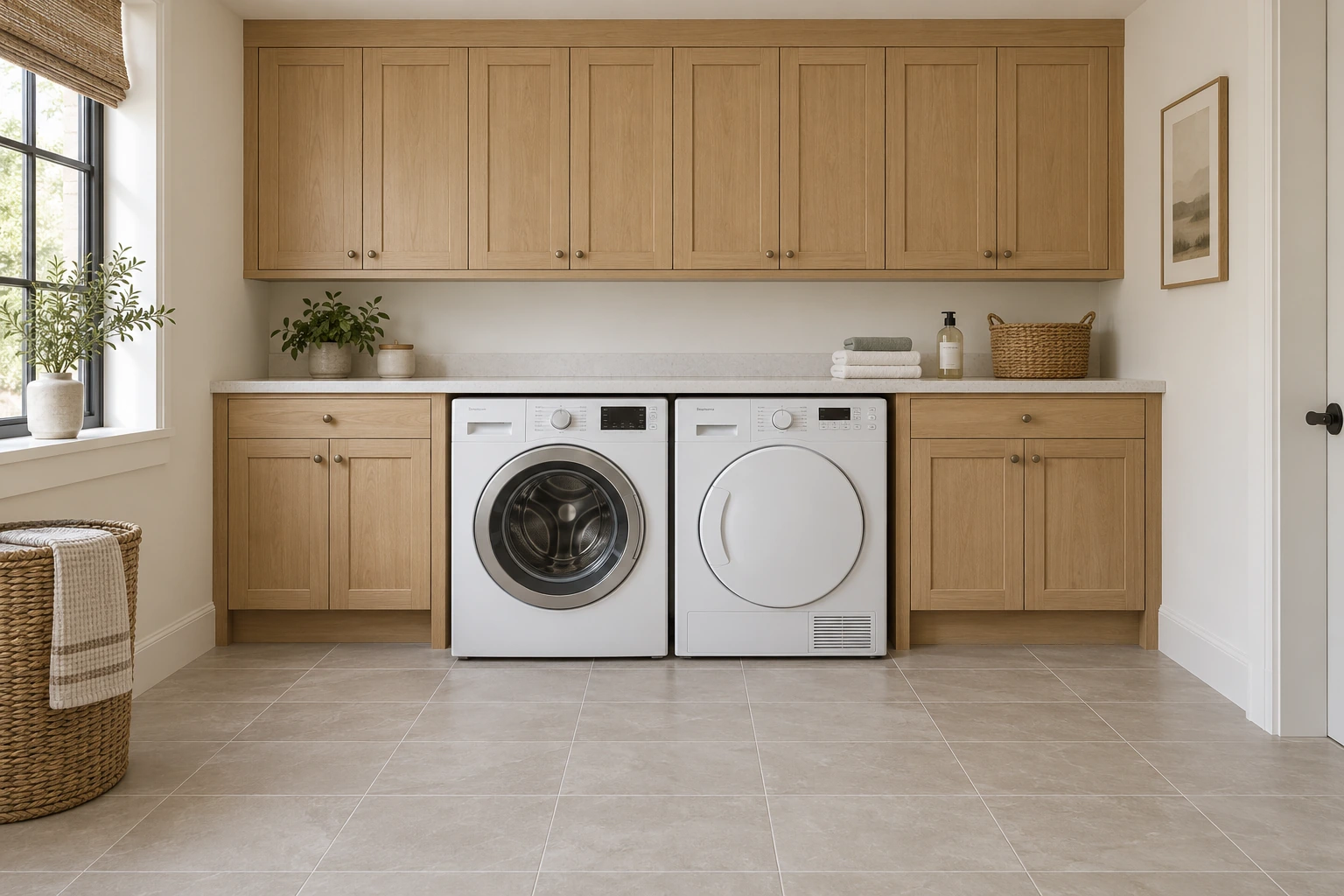
Tile and LVP handle wet shoes and pets. Pair the floor with a good mat at exterior doors.
The installation details that keep water out
- A flat, dry, sound subfloor, with damaged areas replaced (subfloor preparation and leveling)
- Vapor barriers or underlayments required by the manufacturer over concrete
- Perimeter expansion gaps covered by trim, with appropriate sealing where the product allows it (baseboards and transitions)
- Waterproofing membranes under tile in wet areas
No floor fixes an active leak. If you have a plumbing, drainage or crawlspace moisture problem, it should be repaired before new flooring goes in.
Portland moisture considerations
The Portland area gets most of its rain between fall and spring, and many homes have crawlspaces or basements. Moisture from below is often more of a threat to floors than spills from above. We check subfloor and slab conditions before recommending a product, and use the Price Guide to keep your material budget in view.
Material ranges for water-tolerant floors
| Material | Good · Entry | Better · Mid-range | Best · Premium |
|---|---|---|---|
| LVP / vinyl plank | $2–$3.50 | $3.50–$5 | $5–$7 |
| Tile | $1–$3 | $3–$8 | $8–$15 |
| Laminate | $1.50–$2.50 | $2.50–$4 | $4–$6 |
Material-only planning ranges per square foot from the Banana Floors Price Guide. Installation, removal, floor preparation, underlayment, trim, transitions, delivery and taxes are not included.
Waterproof flooring questions
What is the most waterproof flooring?
Porcelain tile installed over the right underlayment is the most water-tolerant floor. Rigid-core LVP is the most common waterproof plank option.
Is waterproof LVP really waterproof?
The planks are, but seams and edges are not sealed like a shower pan. Standing water can reach the subfloor, so leaks should still be cleaned up quickly.
Can I put laminate in a kitchen?
Some newer laminate lines are rated water-resistant or waterproof. Check the warranty terms; standard laminate with a fiberboard core can swell if water sits on it.
What flooring is best for a Portland basement?
Rigid-core LVP and tile are common choices over concrete. Check slab moisture first and follow the product's vapor barrier requirements.