
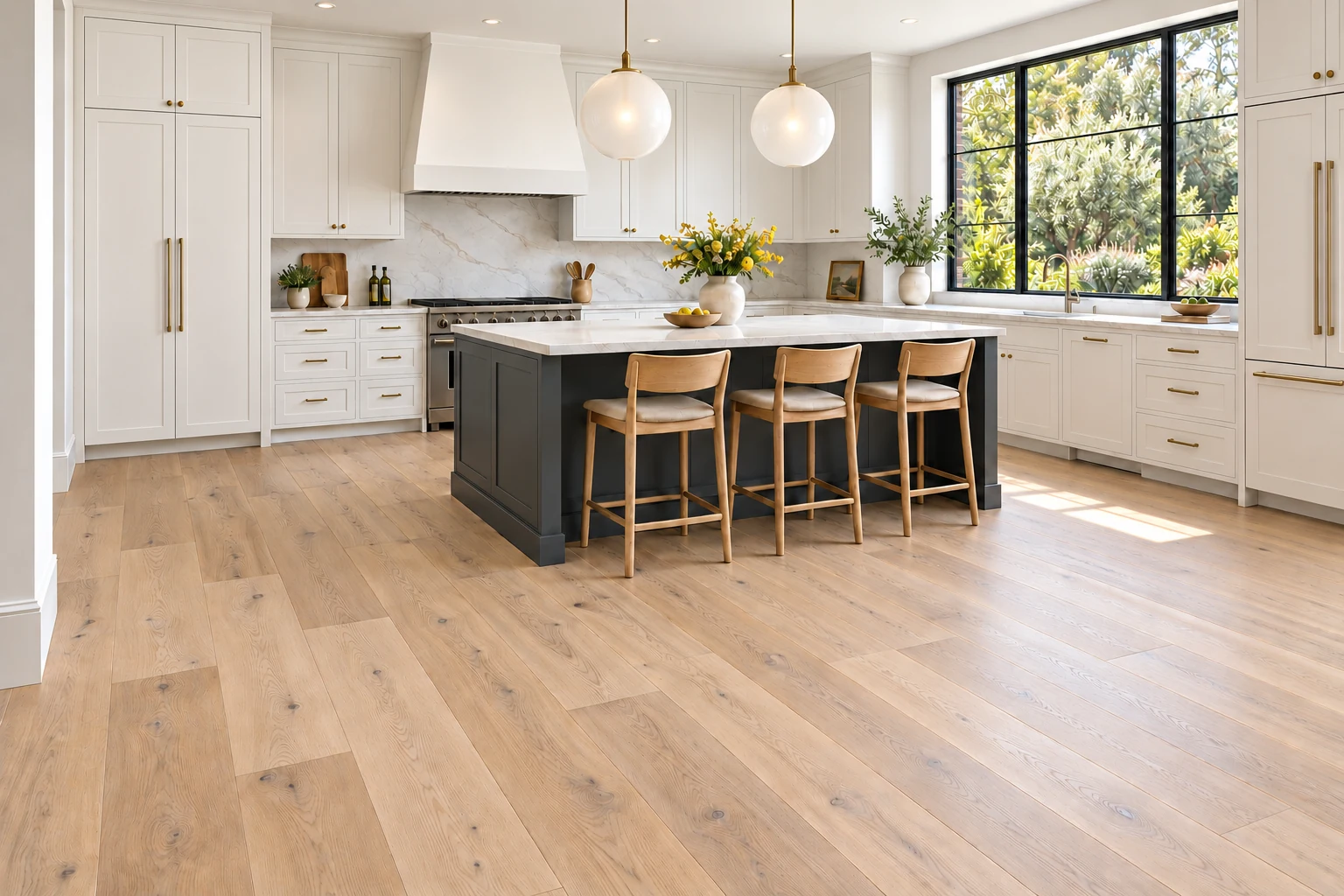
Why LVP works well in Portland homes
Portland gets most of its rain between fall and spring, and that moisture comes into the house on shoes, dogs and umbrellas. Rigid-core LVP is built around a vinyl or stone-polymer core that does not swell when it gets wet the way wood-based products can, which is why many homeowners choose it for entries, kitchens, laundry rooms and finished basements.
It also suits remodels where budget matters. LVP gives a wood or stone look at a lower material cost than most hardwood, it is quieter underfoot than tile, and worn planks can often be replaced individually. The trade-off is that LVP cannot be sanded and refinished like real wood: when the wear layer is used up, the floor is replaced.
What to compare before you buy LVP
Wear layer
The clear top layer protects the printed design. Residential products commonly range from about 8 to 20 mil. Thicker wear layers generally hold up better to pets, rolling chairs and heavy traffic; a 20 mil product is a sensible target for kitchens, hallways and rentals.
Core and total thickness
Rigid-core products (often labeled SPC or WPC) are stiffer and bridge small subfloor imperfections better than flexible vinyl, but no LVP hides a wavy floor. Total thickness of 4–8 mm is common; thicker is not automatically better if the core is soft.
Attached pad and underlayment
Many planks come with an attached pad. Some manufacturers allow or require a separate underlayment or vapor barrier over concrete; others void the manufacturer's warranty if you add one. We check the exact product's installation guide before the floor goes down.
Waterproof claims
Most rigid-core LVP is marketed as waterproof, but the seams and perimeter are not sealed like a shower pan. Standing water from a leaking dishwasher or toilet can still reach the subfloor. Read the manufacturer's warranty and see our waterproof flooring guide if water is your main concern.
How we install LVP
Click-lock floating floors
Most residential LVP is a floating click-lock floor. Planks lock to each other rather than to the subfloor, with an expansion gap at walls that is hidden by baseboard or shoe molding. Floating floors are sensitive to flatness, so we check the subfloor with a straightedge and plan any subfloor preparation and leveling before installation.
Glue-down LVP
Glue-down (dry-back) vinyl is bonded to the subfloor. It is common in commercial spaces and large open areas, and it can be a good option where a floating floor would run too far without a transition. It needs a clean, flat, dry substrate and the correct adhesive for the product.
Kitchens, islands and heavy items
Many manufacturers do not allow floating floors to be pinned under cabinets or kitchen islands. If you are remodeling a kitchen, tell us whether cabinets are going in before or after the floor so the sequence matches the product requirements.
What affects an LVP installation quote
- Removal of existing carpet, laminate, vinyl or tile, and haul-away (flooring removal)
- Subfloor condition: high spots, low spots, squeaks, or concrete moisture
- Number of rooms, closets and doorways, and how many baseboards and transitions are needed
- Stairs, which are priced separately (stair flooring)
- Moving furniture and appliances, and access to the work area
Use the Price Guide to set a material budget, then read our installation cost guide for the other line items. Send us room measurements and photos for a preliminary quote; the final scope is verified before scheduling.
Material price ranges
| Material | Good · Entry | Better · Mid-range | Best · Premium |
|---|---|---|---|
| LVP / vinyl plank | $2–$3.50 | $3.50–$5 | $5–$7 |
Material-only planning ranges per square foot from the Banana Floors Price Guide. Installation, removal, floor preparation, underlayment, trim, transitions, delivery and taxes are not included.
LVP installation questions
Is LVP waterproof?
Most rigid-core LVP is marketed as waterproof, but product specifications and installation requirements vary by manufacturer. The planks resist water; seams and edges are not a sealed barrier. We recommend checking the exact product data before purchase.
What affects the cost of LVP installation?
The installation method, existing floor removal, subfloor condition, stairs, and transitions affect the quote. Send room measurements and photos so we can review the scope alongside your material budget.
Can LVP be installed over my current flooring?
That depends on the selected product and the condition of the existing floor. Send photos of the current surface, doorways and any uneven areas. We review whether removal is needed and identify preparation and transition work before confirming the installation scope.
Are baseboards and transitions included in my LVP quote?
Let us know whether you want existing baseboards reused or replaced, and show where LVP meets tile, carpet or another floor. Those edges, door openings and any stairs should be included in the scope so you can compare complete installation quotes.
Can LVP go in a basement on concrete?
Often, yes. LVP is one of the most common choices for basements. Concrete should be checked for moisture and flatness first, and the manufacturer may require a vapor barrier. We review the slab and the product instructions before confirming the scope.
How is the LVP installation schedule confirmed?
We confirm timing after reviewing the rooms, removal and preparation, access, and material availability. Share any move-in date or rooms that need to remain usable. Product requirements and the agreed scope guide the schedule; the material-budget calculator does not set an installation date.