
Porcelain or ceramic tile?
Both are fired clay products. Porcelain is denser and absorbs less water, which makes it the usual choice for floors, entries and areas that see heavy use. Ceramic tile is often less expensive and easier to cut, and many ceramic tiles are rated for residential floors.
Check that any tile you choose is rated for floor use, and look at slip resistance for bathrooms and entries. Large-format tiles look clean and modern but need a flatter substrate to avoid uneven edges (lippage).
Why the layers under tile matter most
Tile and grout are rigid. If the floor underneath flexes or moves, tile and grout can crack. A durable tile floor starts with a stiff, flat structure and the right underlayment.
Over a wood subfloor
Common approaches include cement backer board or an uncoupling membrane installed over plywood. Industry guidance calls for a stiffer floor under natural stone than under ceramic or porcelain, so we look at joist span and subfloor thickness before recommending a system.
Over concrete
Tile can often be set directly on sound concrete. Cracks in the slab may need a crack-isolation membrane so they do not telegraph through the tile.
Wet areas
Bathroom floors benefit from a waterproofing membrane, especially over living space. Tell us about showers, tubs and floor drains so we can define exactly what is and is not in the flooring scope.
Planning layout, grout and transitions
Before tile is set, we plan where full tiles and cuts will land, how grout lines align with walls and doorways, and how the tile height meets adjacent floors. Tile plus backer or membrane is often taller than the floor next to it, so baseboards and transitions and door clearances are part of the plan.
Cement-based grout is common and economical; urethane and epoxy grouts resist stains better. Wider grout joints are more forgiving with handmade or rustic tile, while rectified porcelain allows tighter joints.
What affects a tile installation quote
- Removal of the existing floor, which can be slow for old tile set in mortar (flooring removal)
- Subfloor repair, leveling and the underlayment or membrane system (subfloor preparation and leveling)
- Tile size, pattern (straight, offset, herringbone), and the number of cuts
- Toilets, vanities and appliances that need to be pulled and reset
Use the Price Guide for a material range and our installation cost guide for the rest. Send room sizes and photos for a preliminary quote.
Tile in Portland kitchens, entries and basements
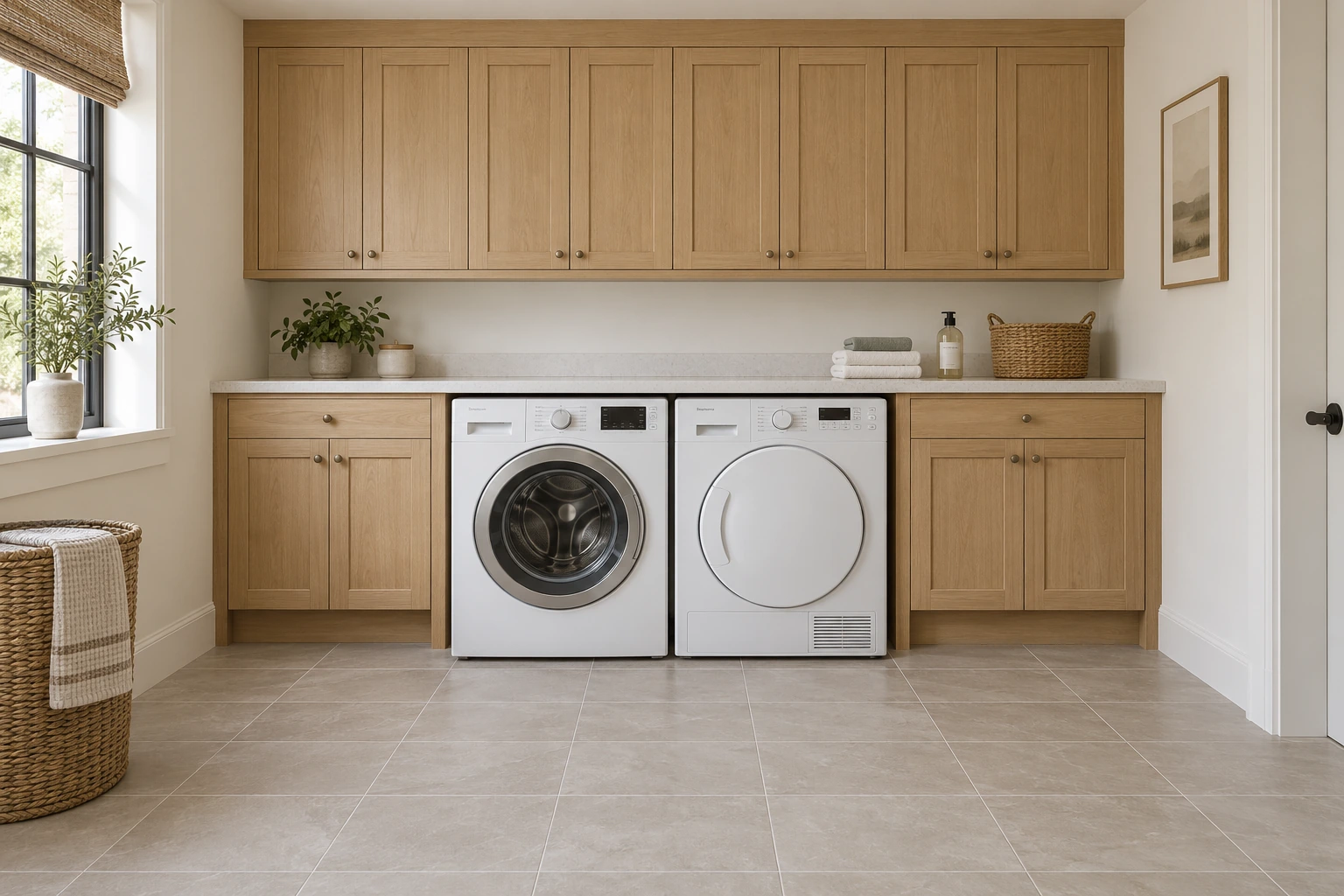
Beyond bathrooms, tile is a strong choice for entries and mudrooms that see wet shoes and gravel during the rainy season, for laundry rooms, and for basements on concrete. Porcelain tile is also used in kitchens where homeowners want a surface that resists water, heat and stains.
Tile is hard and can feel cool underfoot. Some homeowners add electric radiant floor heat under bathroom tile; if you are considering it, plan it before the floor goes in. For large open areas where you want warmth and lower cost, LVP in a stone look is another option.
Material price ranges
| Material | Good · Entry | Better · Mid-range | Best · Premium |
|---|---|---|---|
| Tile | $1–$3 | $3–$8 | $8–$15 |
Material-only planning ranges per square foot from the Banana Floors Price Guide. Installation, removal, floor preparation, underlayment, trim, transitions, delivery and taxes are not included.
Tile installation questions
Is porcelain or ceramic better for a bathroom floor?
Both can work. Porcelain is denser and absorbs less water, so it is the more common floor choice. Whatever you choose, make sure it is rated for floors and has adequate slip resistance.
Can tile go over a wood subfloor?
Yes, when the floor structure is stiff enough and the right underlayment, such as cement backer board or an uncoupling membrane, is used. We review the subfloor before recommending a system.
Why does my tile floor need a membrane?
Membranes can separate tile from minor movement in the substrate, isolate slab cracks, and add waterproofing in wet areas. Which one is needed depends on the room and the substrate.
Can new tile go over old tile?
Sometimes, if the old tile is well bonded and flat and the added height works at doorways. In many cases removal is the better long-term option. Send photos for a review.
What affects the cost of tile installation?
Removal, substrate preparation, membranes, tile size and pattern, the number of cuts, and fixtures that need to be removed and reset. Send details for a preliminary quote.