
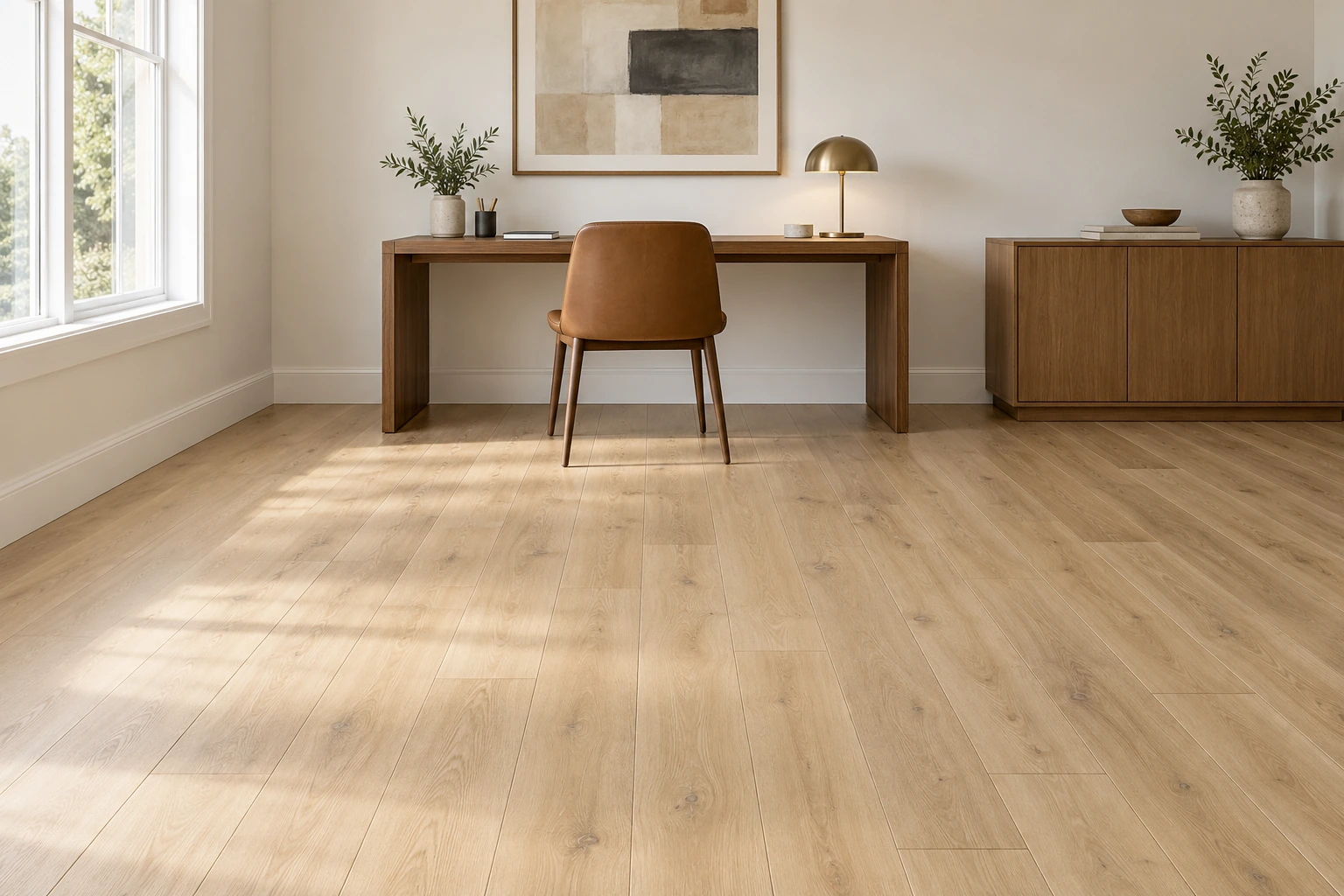
What laminate is and where it fits
Laminate is a layered product: a wear-resistant top coat over a printed design layer, on a high-density fiberboard (HDF) core with a backing layer. The top layer is harder than many hardwood finishes, so laminate resists scratches from pets and furniture well.
Traditional laminate cores can swell if water sits on them, so laminate is best in bedrooms, living rooms, offices and hallways. Many newer lines are sold as water-resistant or waterproof with sealed edges and tighter joints; if you are considering laminate for a kitchen or entry, compare those products with LVP and see our waterproof flooring guide.
How to compare laminate products
AC rating
The AC (abrasion class) rating describes surface durability. AC3 is generally rated for all residential rooms, AC4 for heavy residential and light commercial use, and AC5 for heavier commercial traffic.
Thickness and core
Thicker boards (10–12 mm) tend to feel more solid and sound less hollow, but a dense core and proper underlayment matter as much as thickness.
Water resistance
Look at what the manufacturer's warranty actually covers: surface spills for a set number of hours, or standing water. Those are different promises.
Underlayment
Some laminate has an attached pad; other products need a separate foam or acoustic underlayment, plus a vapor barrier over concrete. Condo buildings may require a specific sound rating.
How laminate is installed
Laminate is installed as a floating click-lock floor. The boards lock together over underlayment and are not fastened to the subfloor, leaving an expansion gap at the walls that is covered by baseboard or shoe molding. Floating floors need a flat subfloor, so high and low spots are addressed first with subfloor preparation and leveling.
Laminate cannot be sanded or refinished. Individual boards can sometimes be replaced, so keep a box of leftover planks after installation.
Planning your laminate project
- Measure each room and add a waste allowance (the Price Guide lets you choose 5–15%)
- Decide what happens to the existing floor (flooring removal)
- Note where laminate meets tile, carpet or other floors, and whether baseboards will be reused (baseboards and transitions)
- Ask about stairs separately (stair flooring)
Send us measurements and photos for a preliminary quote. Final scope is verified on site before scheduling. Our installation cost guide explains the parts of a quote that are not material.
Living with laminate
Laminate is easy to care for: sweep or vacuum regularly and clean with a lightly damp (not wet) mop or the cleaner the manufacturer recommends. Avoid steam mops and standing water. Felt pads under furniture and mats at entries help the surface last.
Because laminate floats, it moves slightly with temperature and humidity. That is why expansion gaps at the walls and at fixed objects such as kitchen islands are important, and why very long runs may need a transition. If a board is damaged, it can often be replaced, which is another reason to keep a few spare boards from the original order.
Material price ranges
| Material | Good · Entry | Better · Mid-range | Best · Premium |
|---|---|---|---|
| Laminate | $1.50–$2.50 | $2.50–$4 | $4–$6 |
Material-only planning ranges per square foot from the Banana Floors Price Guide. Installation, removal, floor preparation, underlayment, trim, transitions, delivery and taxes are not included.
Laminate installation questions
Is laminate waterproof?
Standard laminate is not waterproof because the core is fiberboard. Some newer laminate lines are marketed as water-resistant or waterproof; check what the manufacturer's warranty covers before using laminate in kitchens, bathrooms or entries.
What AC rating do I need for my home?
AC3 is generally suitable for residential rooms. AC4 is a good choice for busy households, pets and rentals. Commercial spaces may need AC4 or AC5.
Laminate or LVP: which should I choose?
Laminate often has a sharper wood-look surface and good scratch resistance at a lower price. LVP handles water better and is quieter underfoot. In wet areas we usually suggest LVP or tile.
Can laminate be installed over existing flooring?
Sometimes, over a flat, solid hard floor. Carpet and pad must be removed. Send photos so we can review the existing surface and any height changes at doorways.
What affects the cost of laminate installation?
Removal, subfloor preparation, underlayment, transitions, baseboards, stairs and the number of rooms. Use the Price Guide for material and send project details for a preliminary installation quote.